✨Already Released🎉
Master Software Engineering
and Development
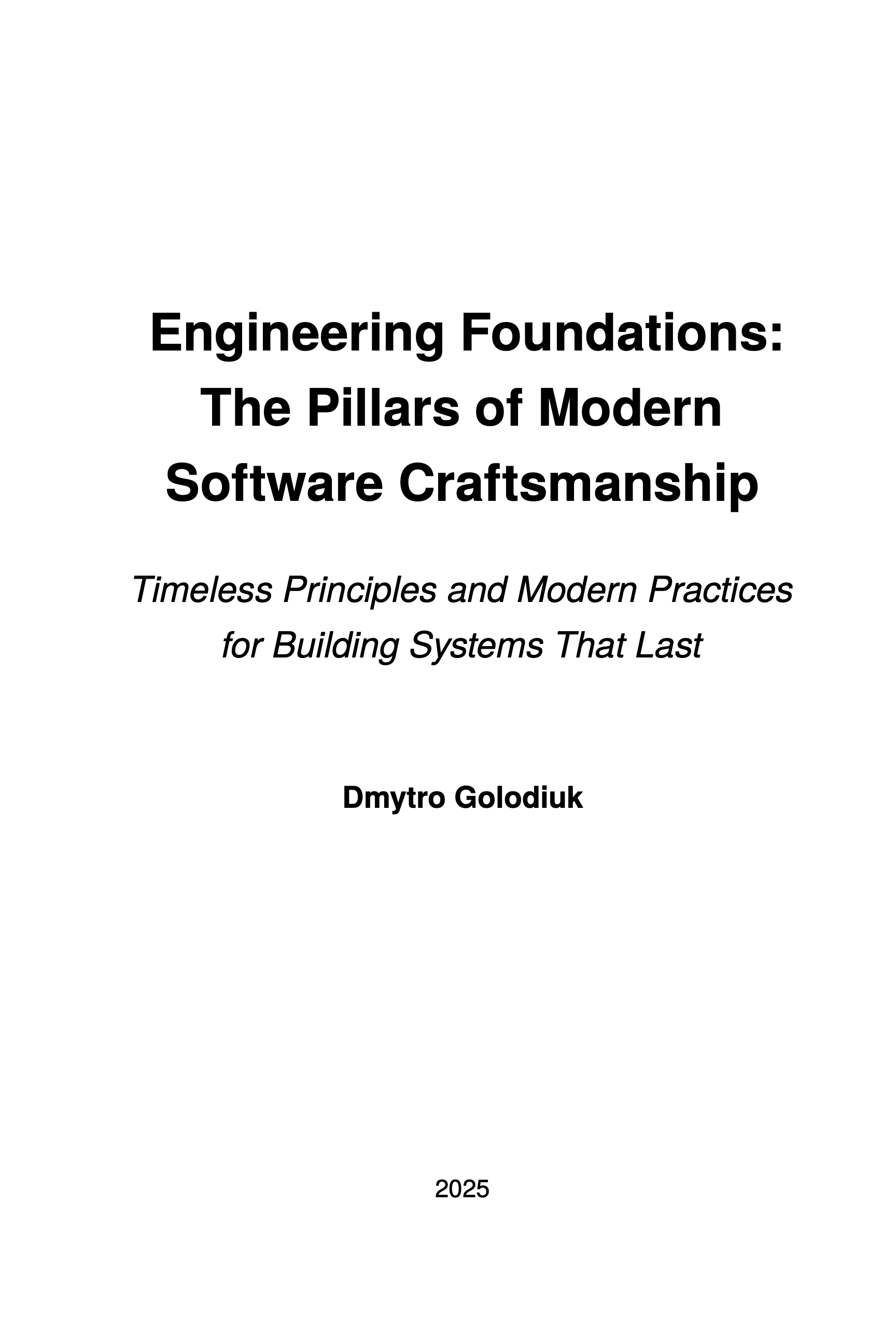
From Code to System Design
From Code to System Design
Scroll to explore the chapters.
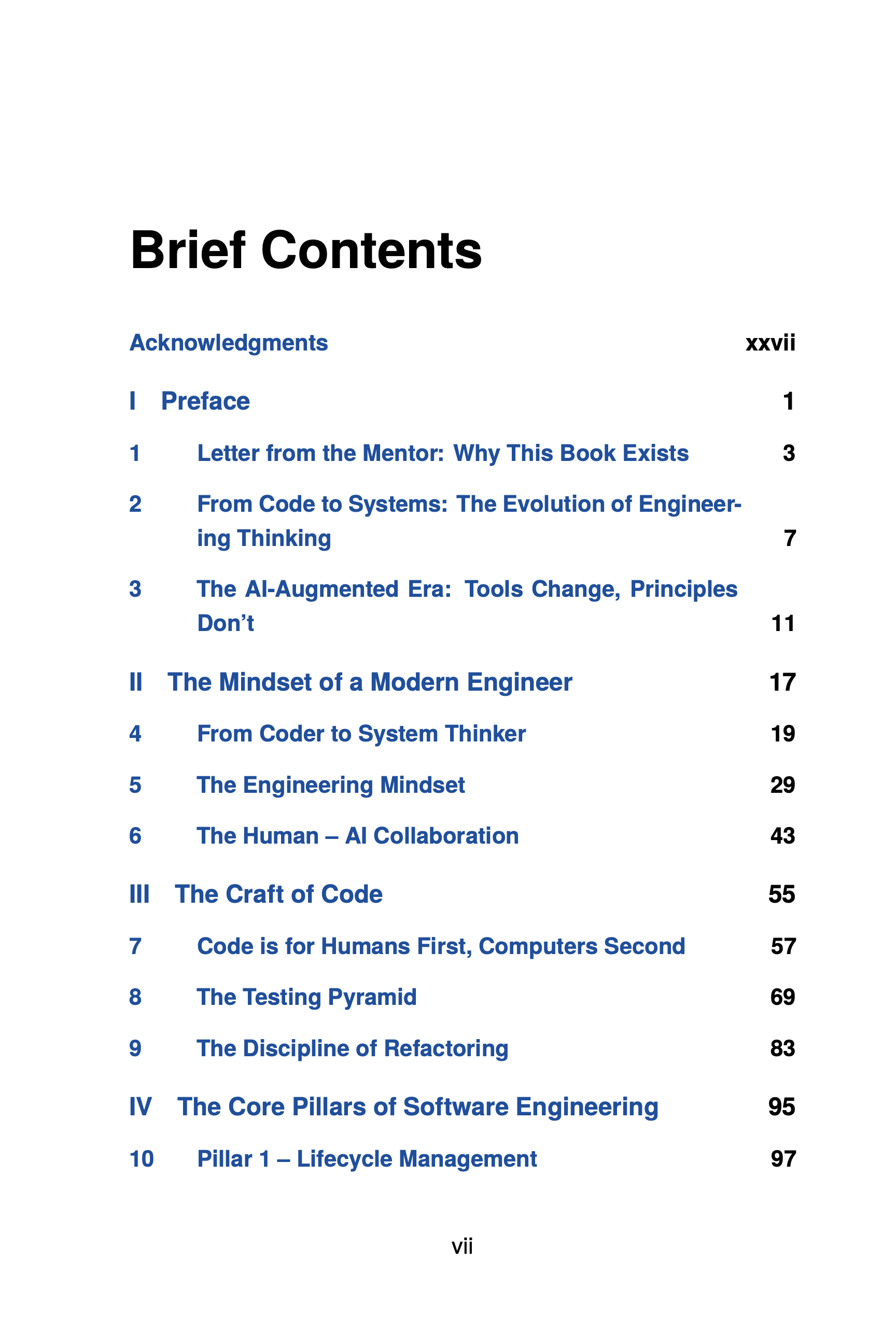
Preface
"The future belongs to those who understand how systems think."
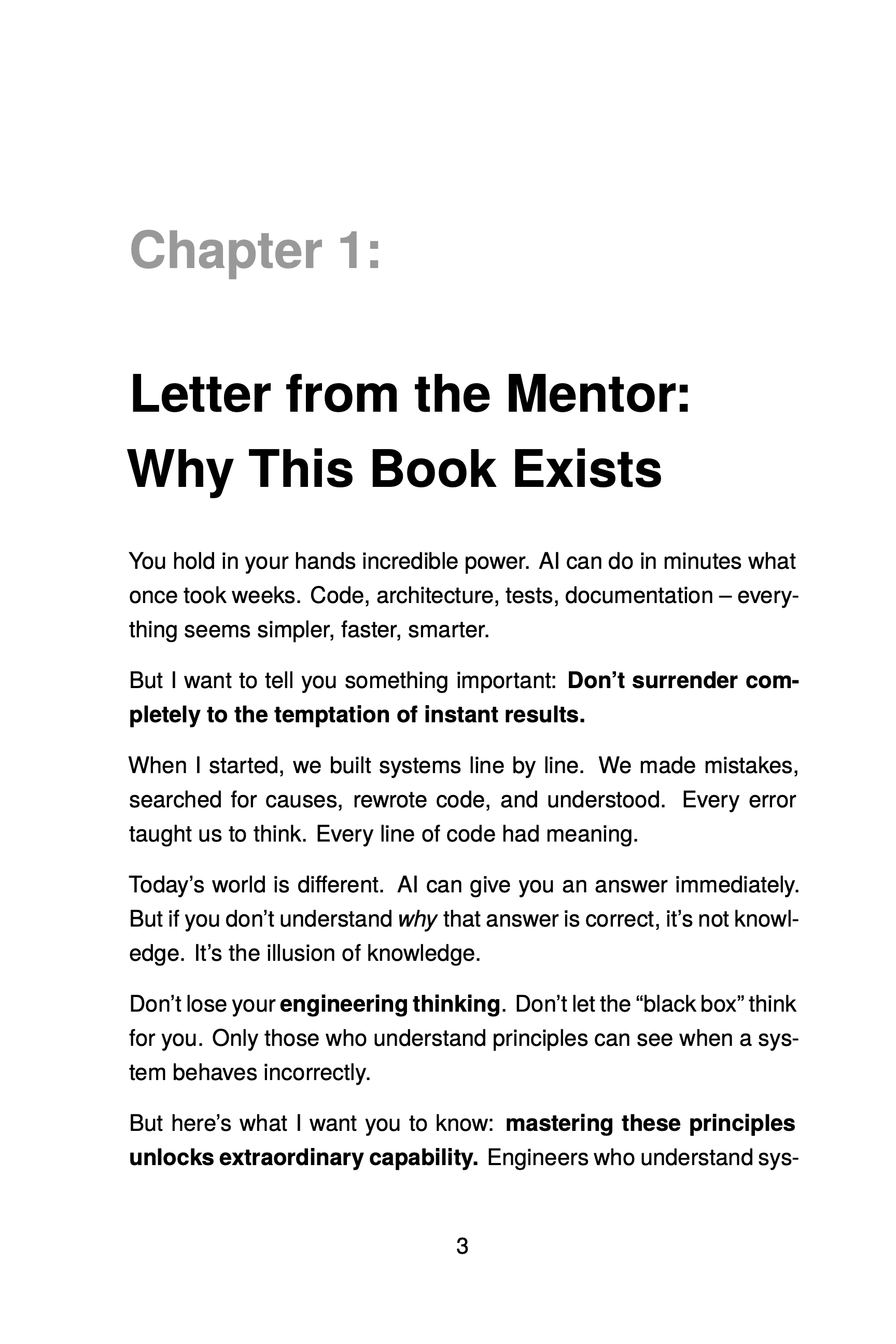
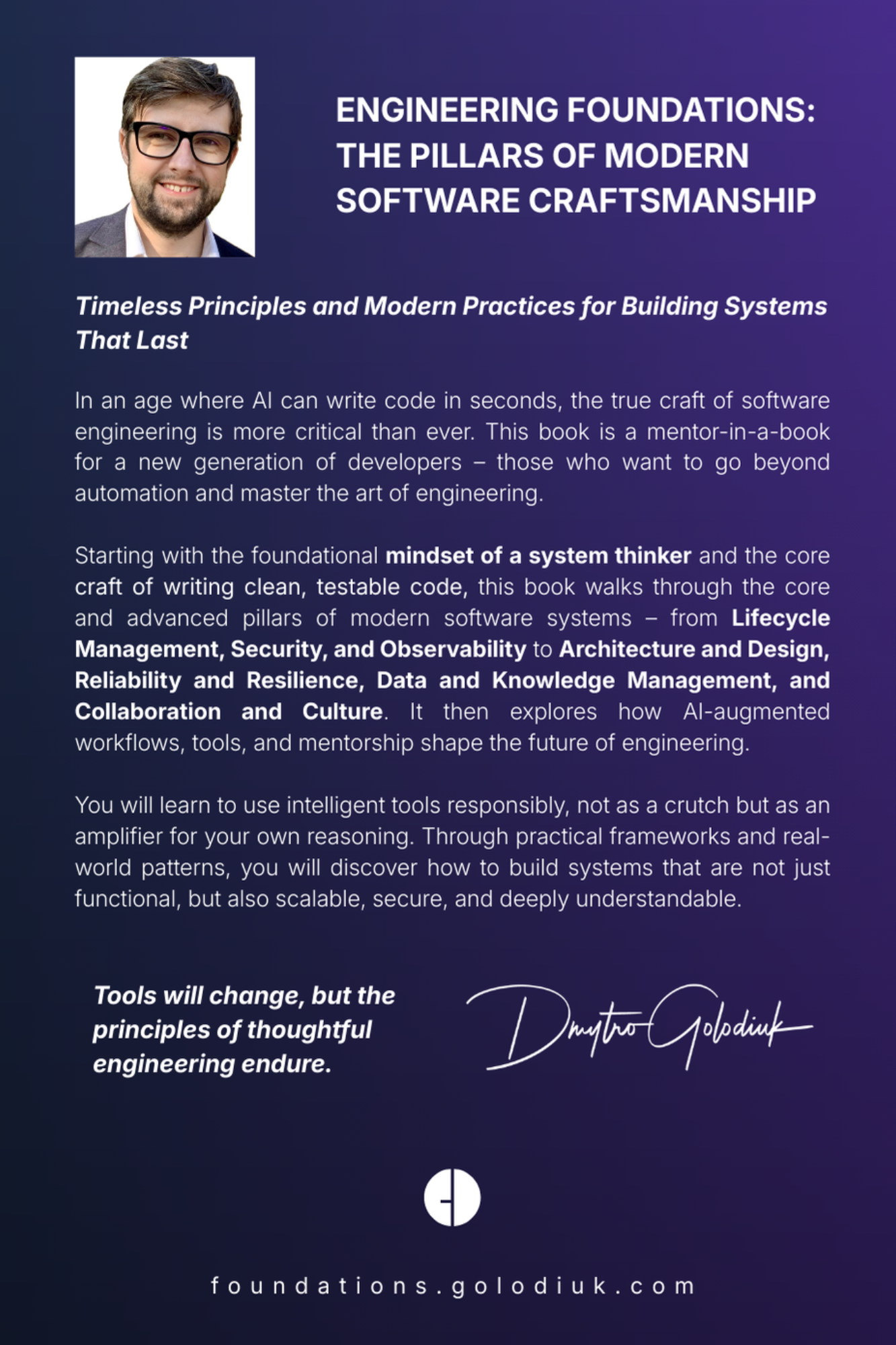
AI can generate code in seconds, but it cannot generate understanding. This book is a manifesto for thoughtful engineering – helping you build systems, habits, and a career that endure beyond the hype.
"The paradigm has shifted from writing to orchestrating."
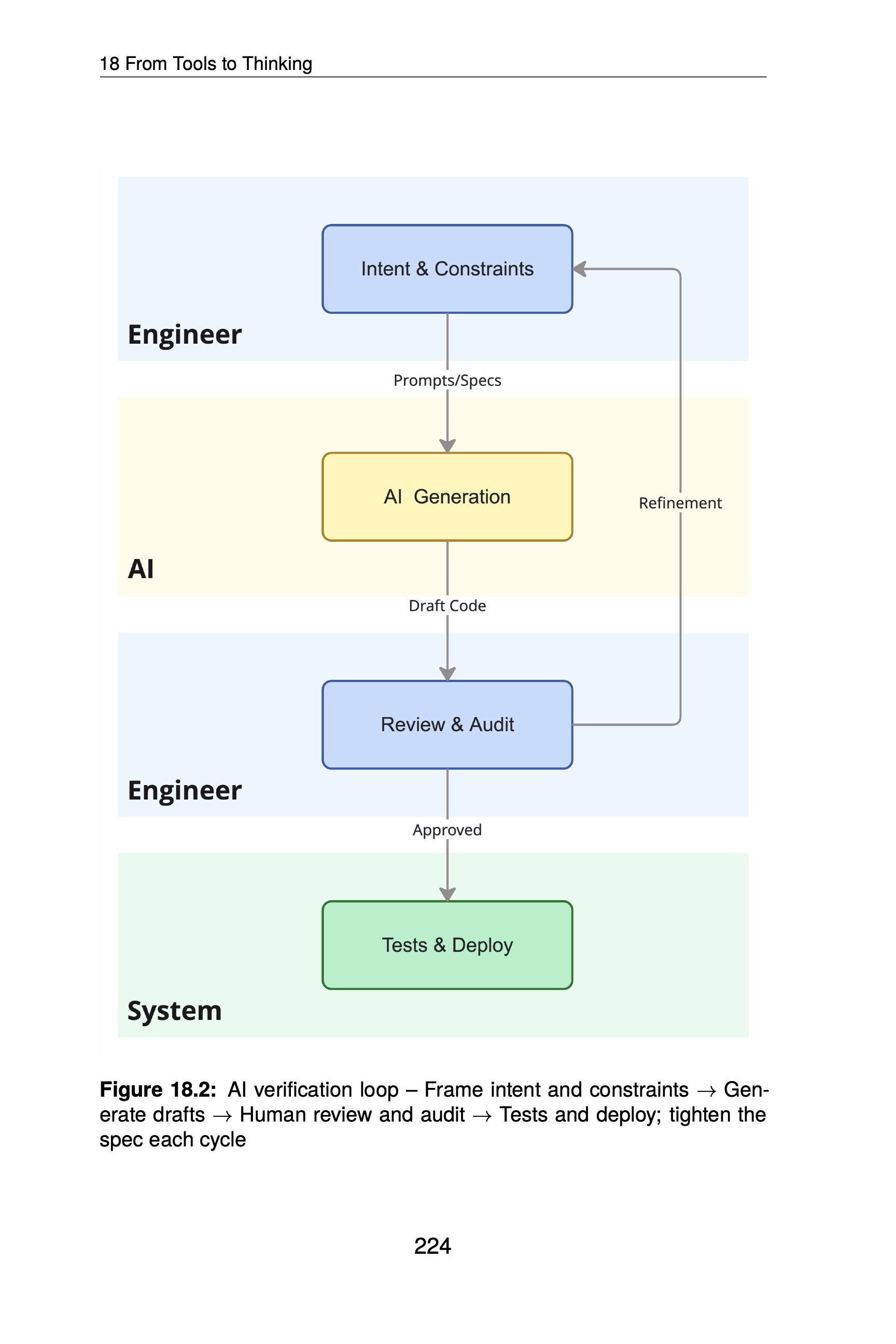
We are moving from manual coding to managing the creation process. Your new core skills are decomposition, verification, and integration – turning AI-generated pieces into a unified, reliable system.
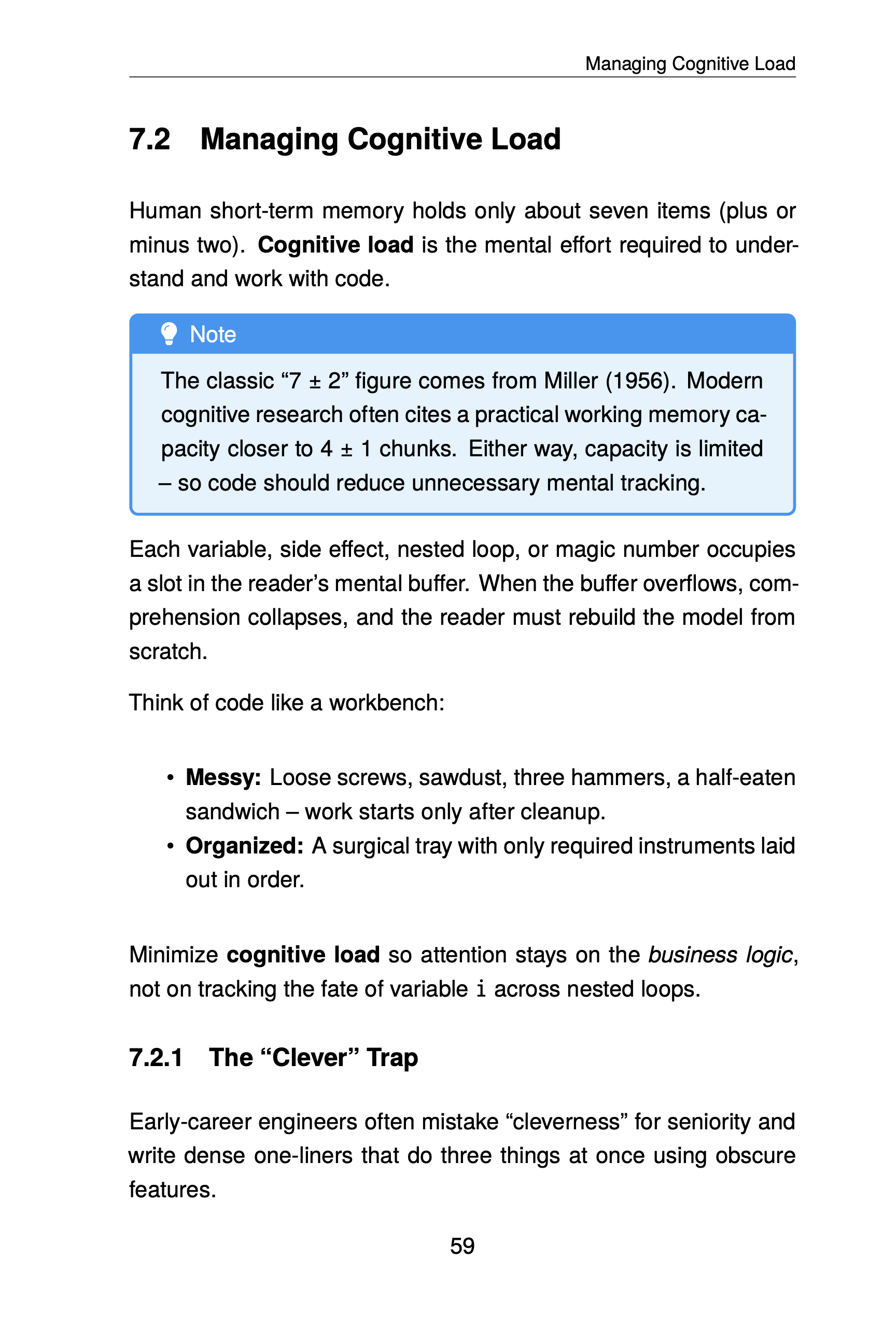
"Tools change. Principles don't."
You own every line of code you ship, even if you didn't write it. Critical thinking and deep foundational knowledge are the only ways to retain control in the age of the "black box".
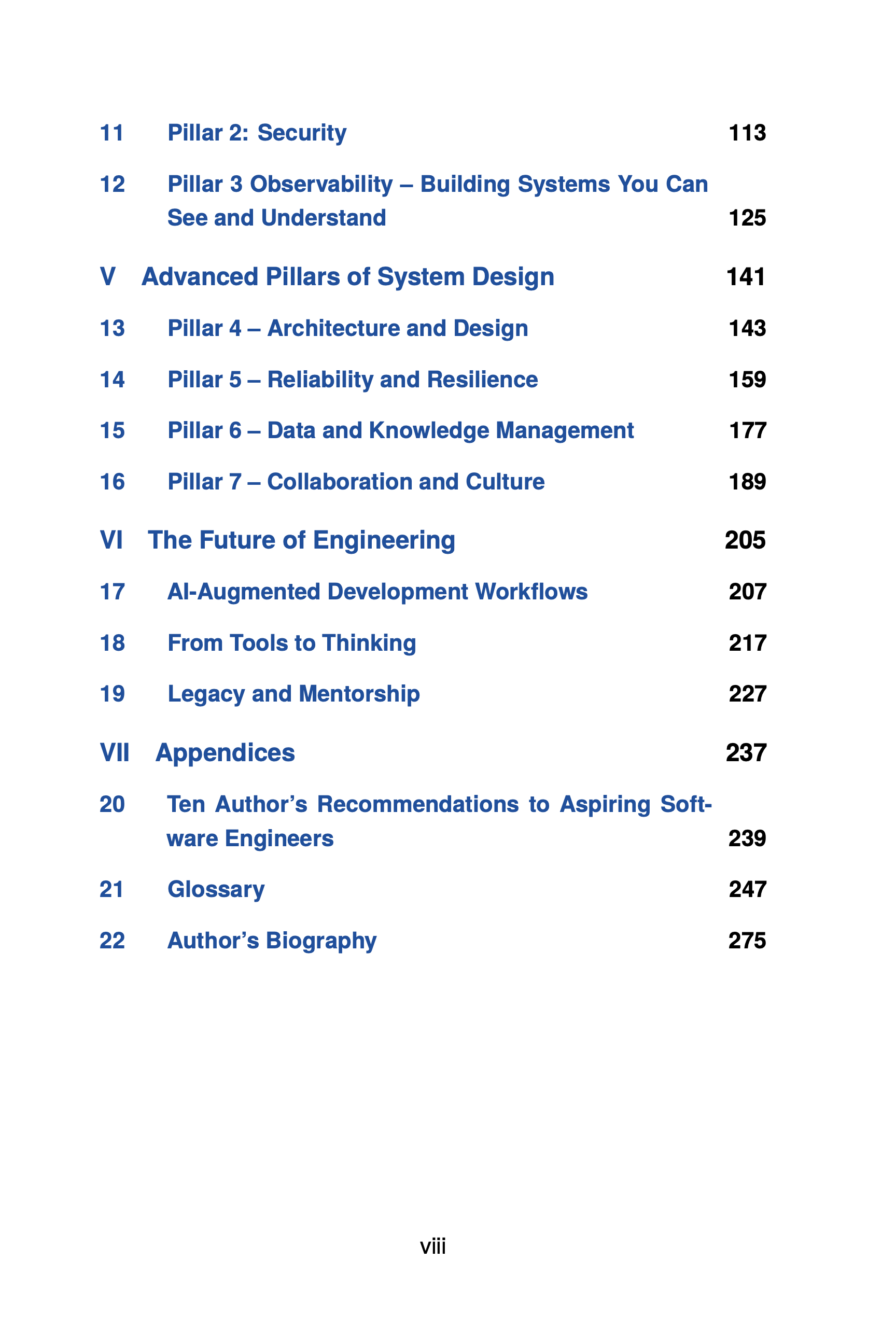
Part I
Move beyond the tunnel vision of "making it work." Learn to protect system invariants, define clear boundaries, and prevent local optimizations that destroy global reliability.
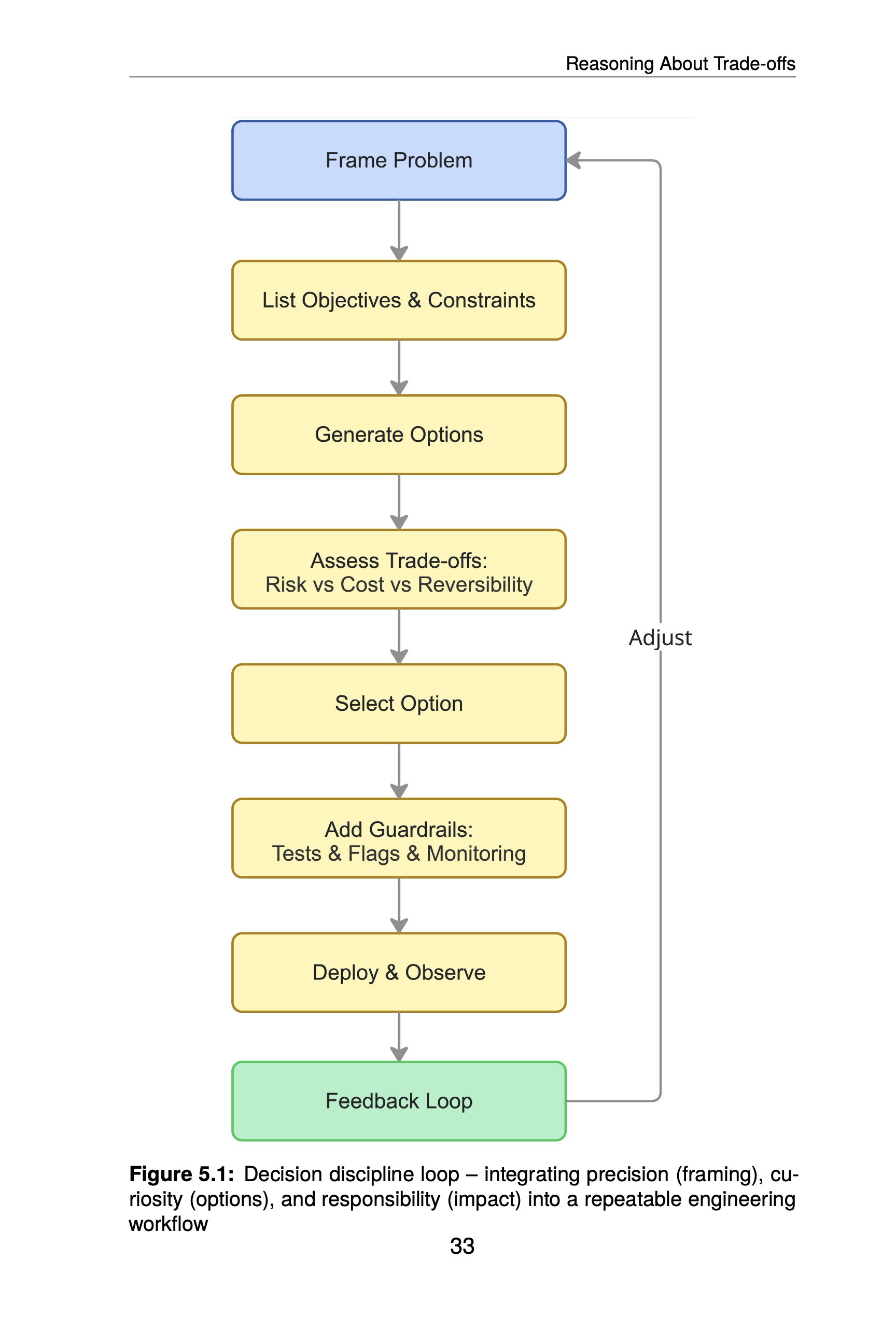
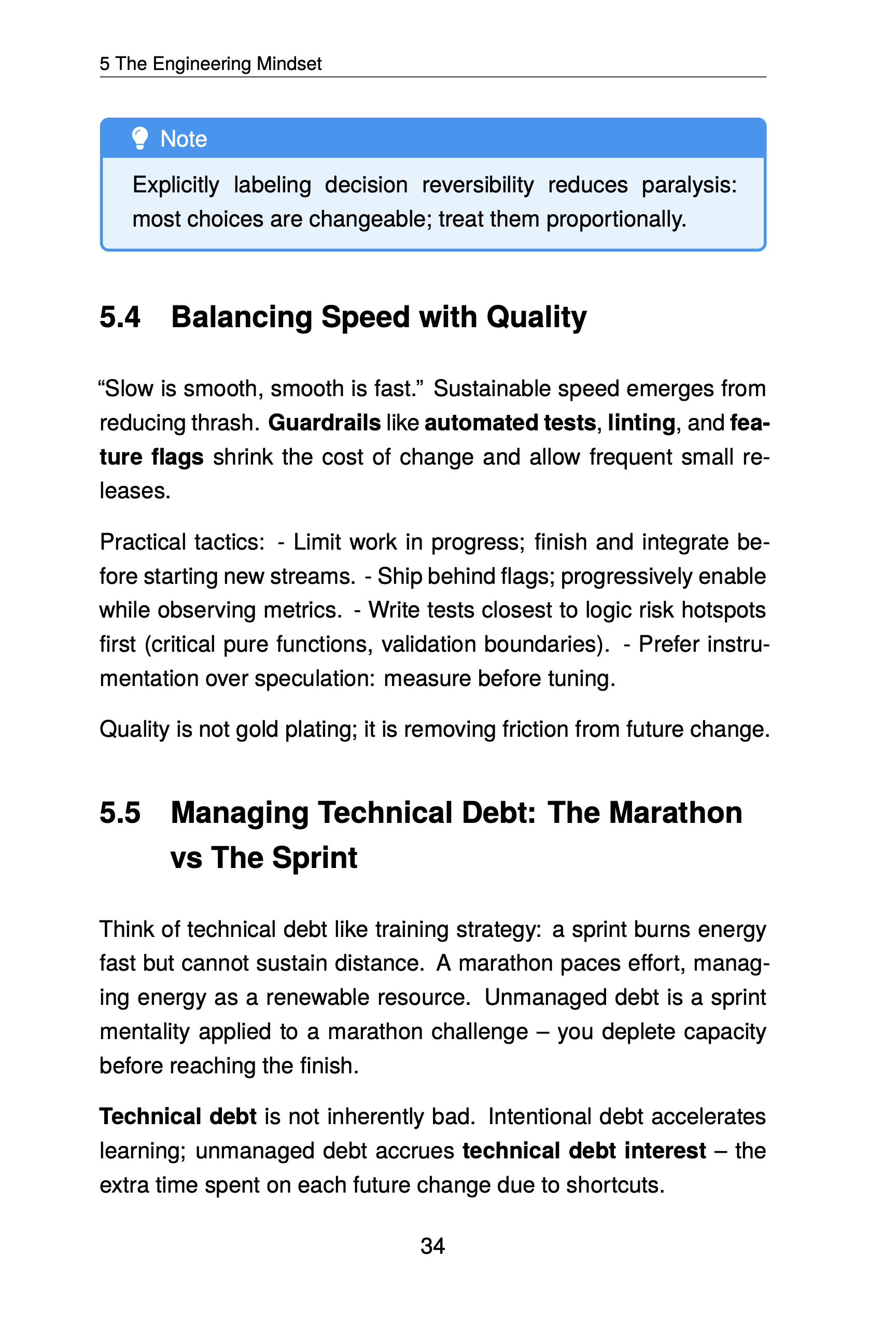
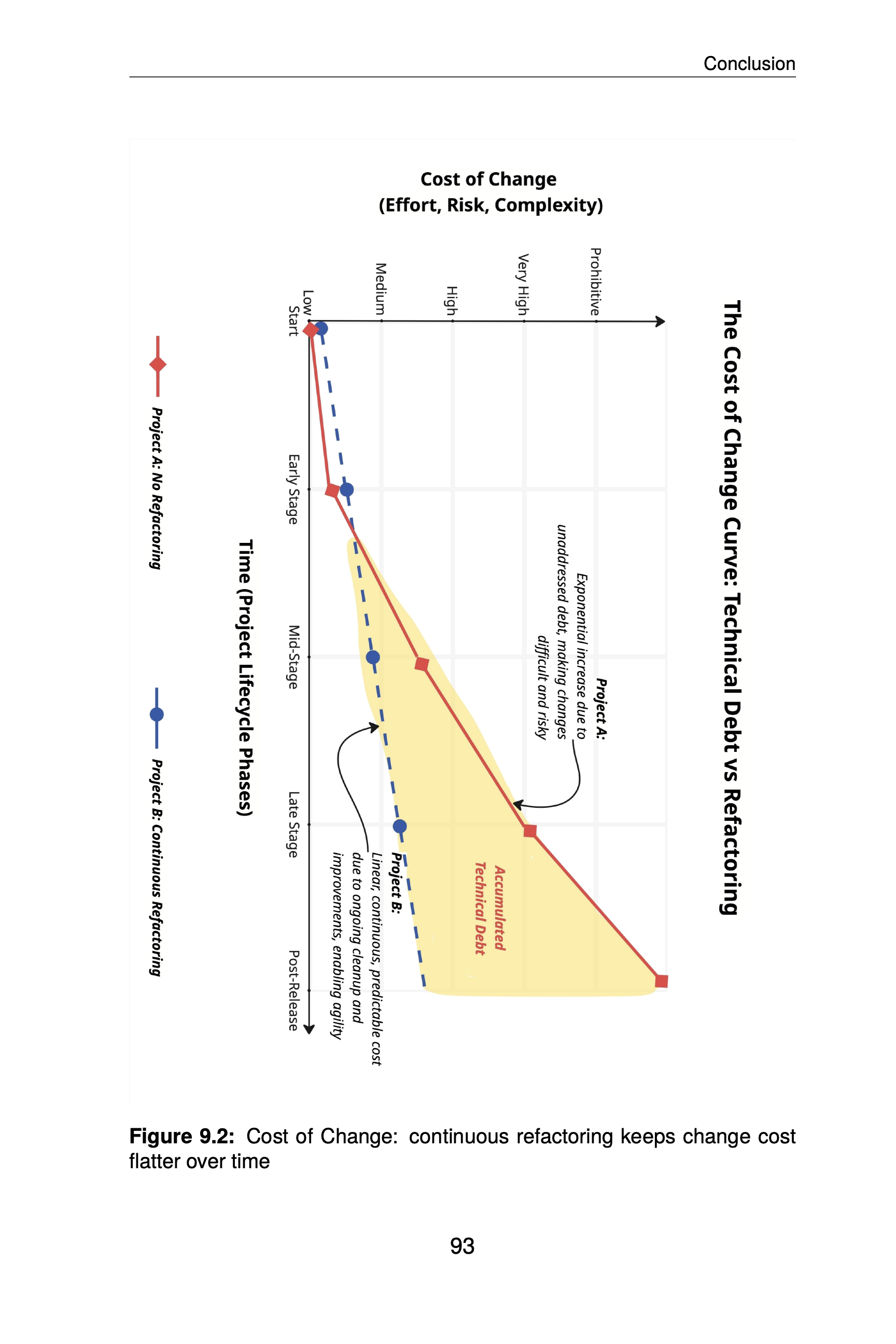
Speed without discipline is just noise. Master the art of the trade-off, treat technical debt as a portfolio, and distinguish between reversible "Two-Way Doors" and permanent commitments.
Don't settle for the "passive consumer" mindset. Treat AI as a tireless intern: you define the intent, verify the output, and own the result. Move from writing code to auditing logic.
Part II
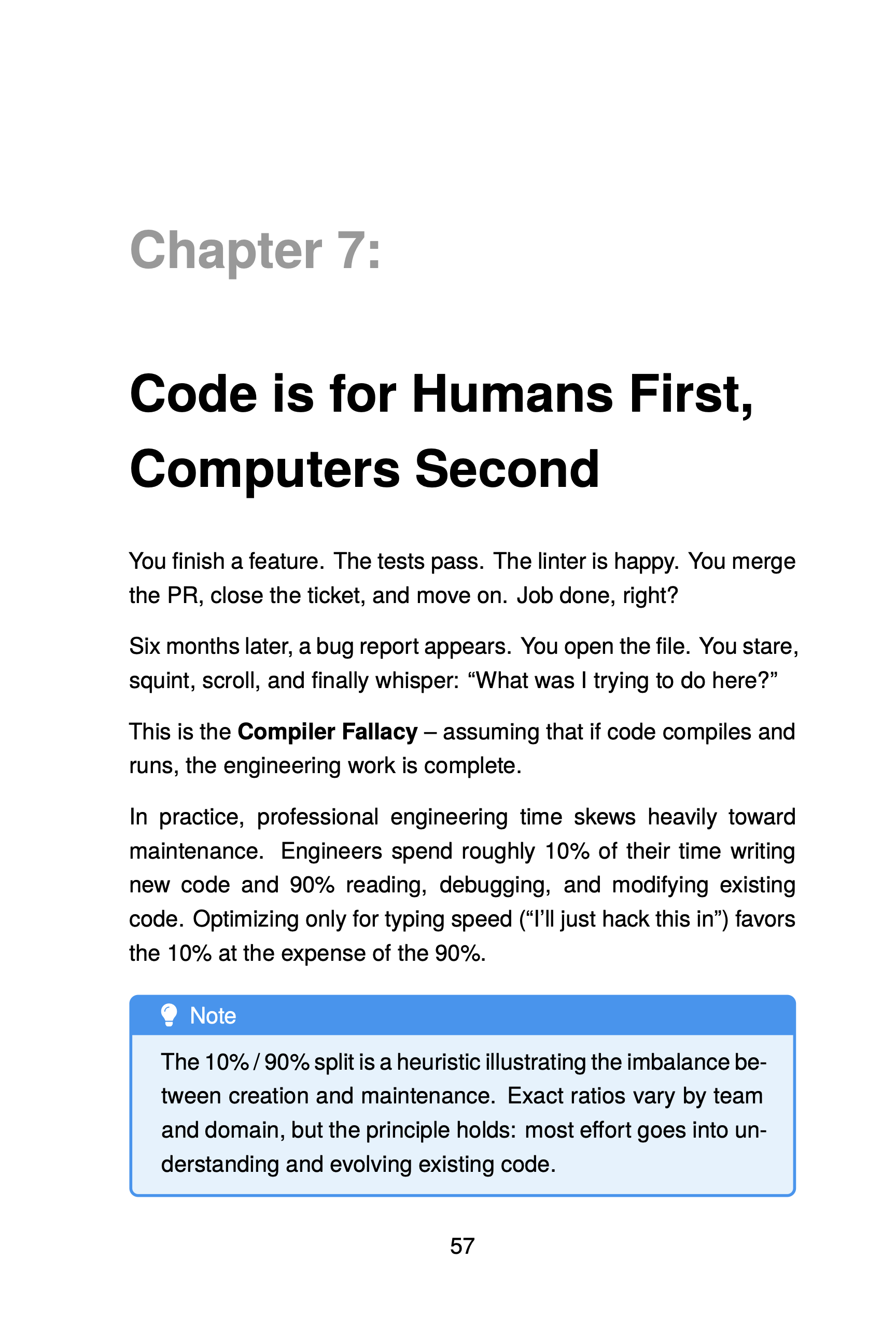
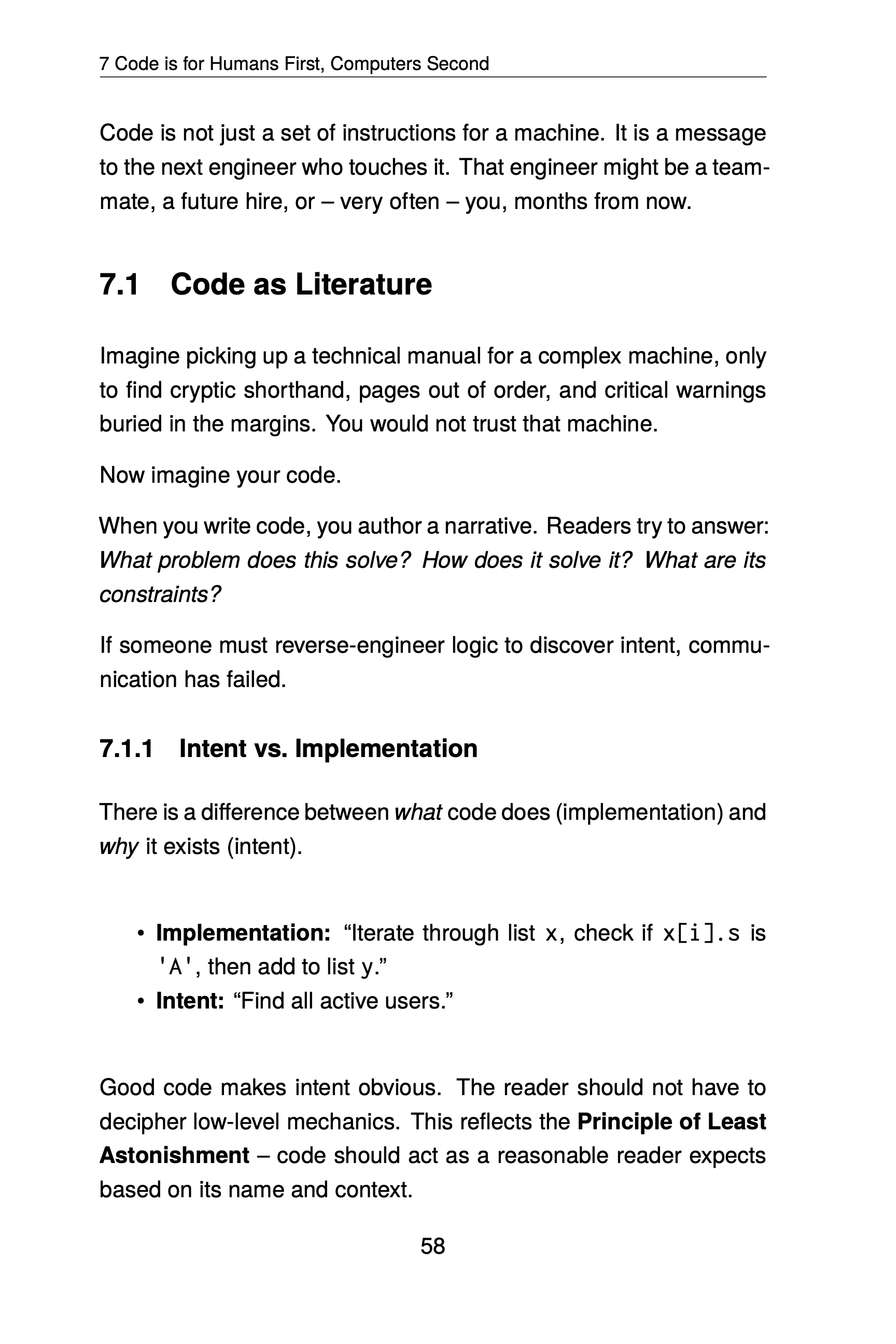
Pass the "Empathy Test": write code that respects your teammates' cognitive load. Use structure, naming, and literature-like flow to tell a clear story, not just execute instructions.
Avoid the "Ice Cream Cone" anti-pattern. Build reliable systems on a solid foundation of fast unit tests, strategic integration checks, and sparing end-to-end verification.
Wear the "Two Hats": separate authoring from editing. Apply the Boy Scout Rule to fight software entropy and pay down technical debt interest before it compounds.
Part III
The foundational principles every software engineer must master.
Move beyond "it works on my machine." Treat your build pipeline as a factory floor: enforce immutable artifacts, demand environment parity, and automate the path from commit to production.
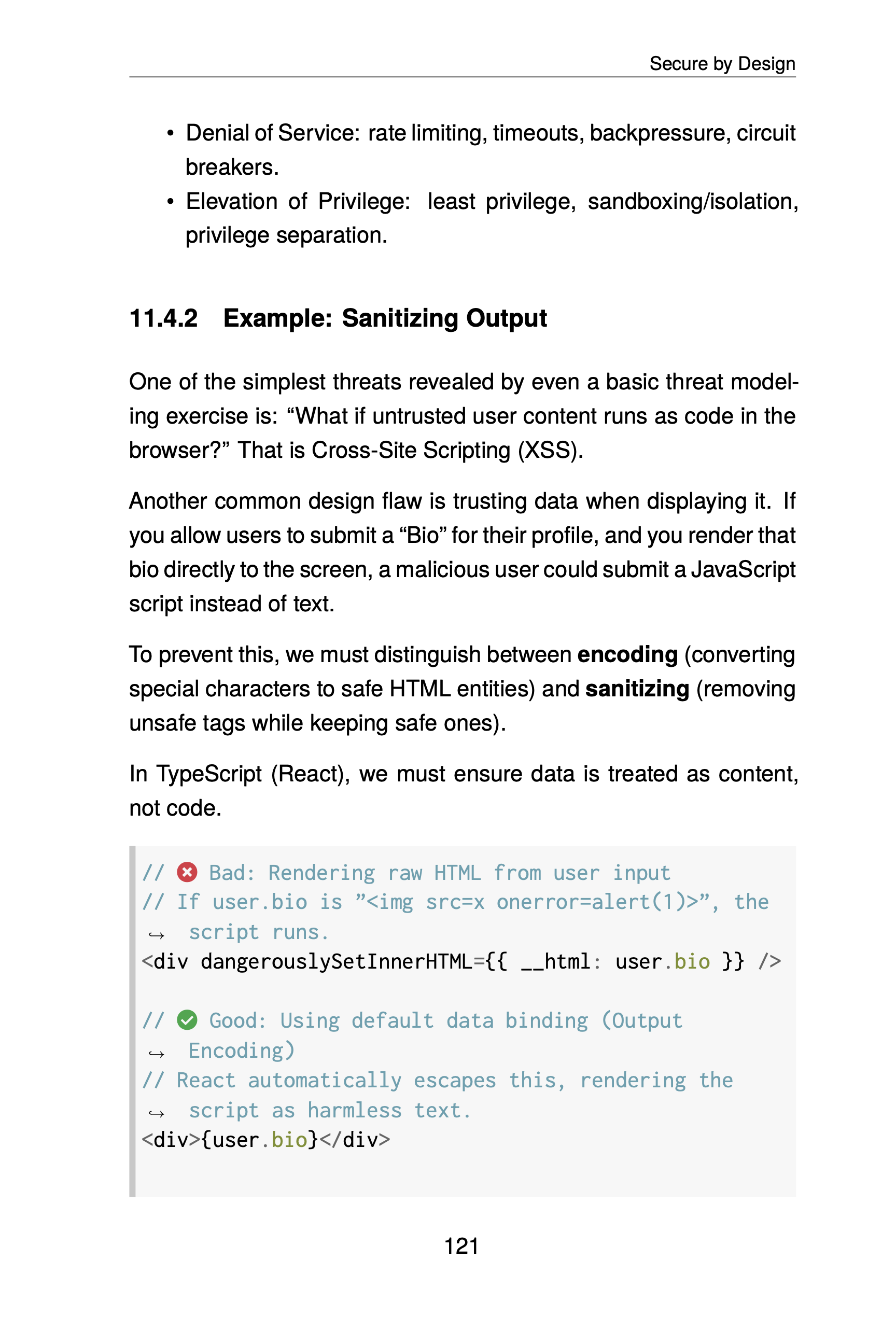
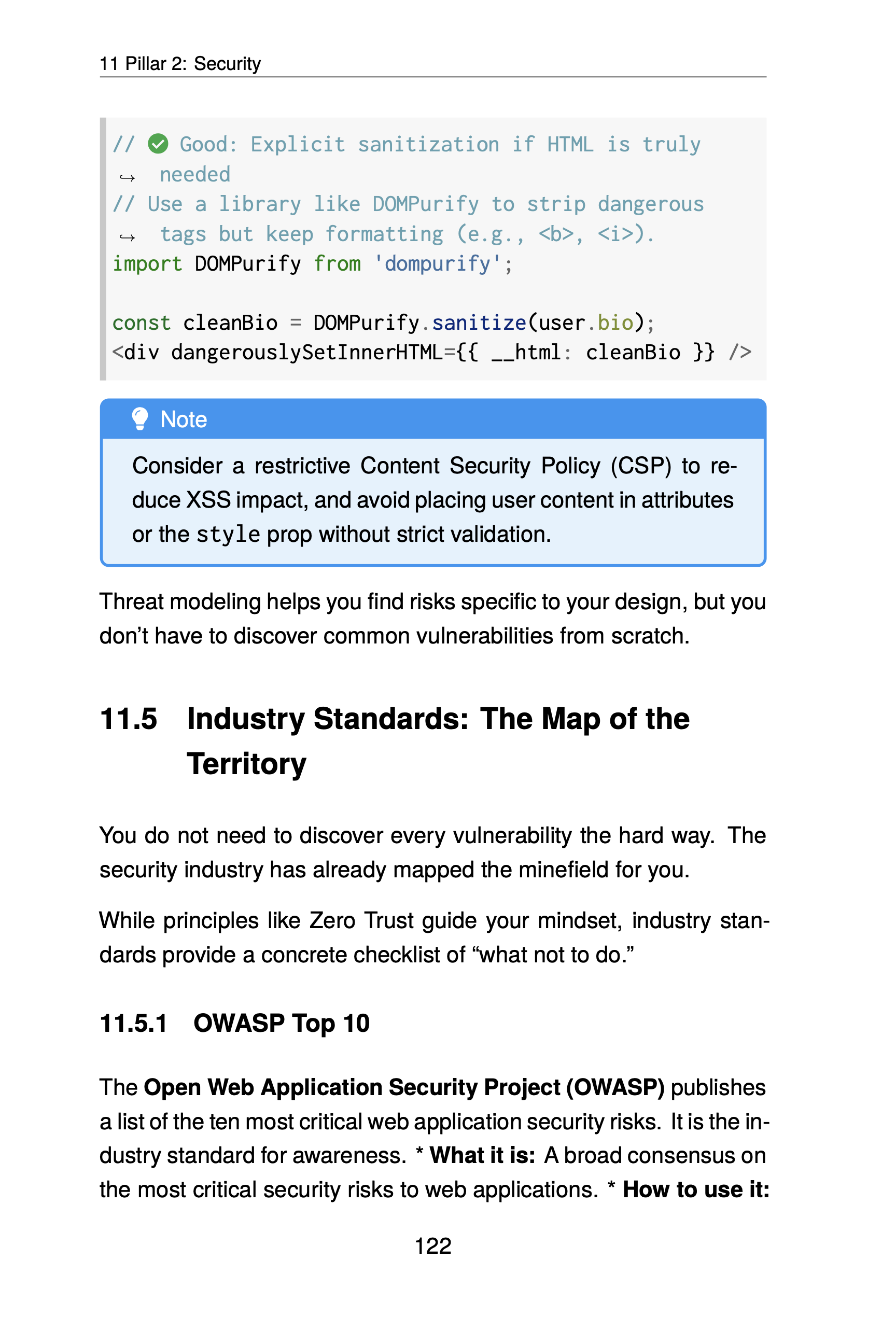
Stop treating security as a feature you add at the end. Adopt a "Zero Trust" mindset, practice "Defense in Depth," and learn to think like an adversary before you write a single line of code.
Turn the lights on in the black box of distributed systems. Move from guessing to knowing by mastering the three signals: Logs for events, Metrics for trends, and Traces for causality.
Part IV
Distinguish between reversible "Two-Way Doors" and permanent "One-Way Doors." Build evolutionary architectures that use fitness functions as guardrails for change.
Reliability is a spare tire; Resilience is a run-flat. Design systems that embrace failure with Circuit Breakers, Bulkheads, and a "Fail Fast" philosophy.
Respect "Data Gravity." Treat data as a Product with strict contracts, and manage schema evolution with the "Expand and Contract" pattern to avoid downtime.
Reduce your "Bus Factor" and choose Stewardship over Ownership. Foster psychological safety and use Blameless Postmortems to turn outages into upgrades.
Part V
Looking ahead with clarity and purpose.
Evolution from coder to "Director and Validator." Treat AI as a Co-Engineer, where your value lies in precise "Prompt Engineering" and rigorous verification of logic.
Syntax is becoming a commodity. Adopt the "Editor-in-Chief" mindset: focus on Problem Framing, architectural design, and auditing AI output over manual coding.
True legacy is not the code you write, but the team that can sustain it without you. Move knowledge from implicit to explicit and plant trees you'll never sit under.
From the Author
The Pillars of Modern Software Craftsmanship
By Dmytro Golodiuk
Choose your preferred format and find the best place to purchase.
ePub, Kindle
Paperback & Hardcover
Listen Anywhere
Select a format above to see available retailers